


If your team spends ten or more hours a week on quotes, follow-ups and data entry, business process automation is how you get those hours back, without hiring and without replacing the tools you already run on.
I am Jared Lean, and most of the automation work I do for New Zealand small businesses starts the same way: a busy owner who knows their admin is out of control but cannot find the time to fix it. Quotes take days to go out. Leads slip because nobody followed up. The same numbers get typed into three different systems. This guide is the practical version of what I do about it, what business process automation actually is, what to automate first, what it costs, and the results you can realistically expect.
Quick answer
Business process automation (BPA) is using software to run repetitive, rule-based work, quotes, invoices, reminders, follow-ups and data entry, so your team does not have to do it by hand. For a small business the goal is simple: fewer hours on admin, fewer jobs slipping through the cracks, and faster responses that win more work.
What is in this guide
What business process automation actually means
Strip away the jargon and business process automation is just this: a task that a person used to do by hand now happens on its own. An invoice gets created when a job is marked complete. A text goes out the moment a quote is sent. A new enquiry lands in your job board, your calendar and your inbox at the same time, without anyone copying it across.
It helps to split it into two kinds, because they solve different problems and cost different amounts to build.
| Type | What it handles | Everyday example |
|---|---|---|
| Rule-based automation | Fixed, predictable steps that always happen the same way | When an invoice is paid, send a branded confirmation and a review request |
| AI automation | Steps that need judgment, language or a decision | Answer the phone, qualify the caller, and decide whether it is a real lead or spam |
Most small businesses need more rule-based automation than they think and less AI than the headlines suggest. The trick is matching the right tool to the right job, not bolting a chatbot onto everything. My business automation service is built around that principle: fix the bottleneck with the simplest thing that works.
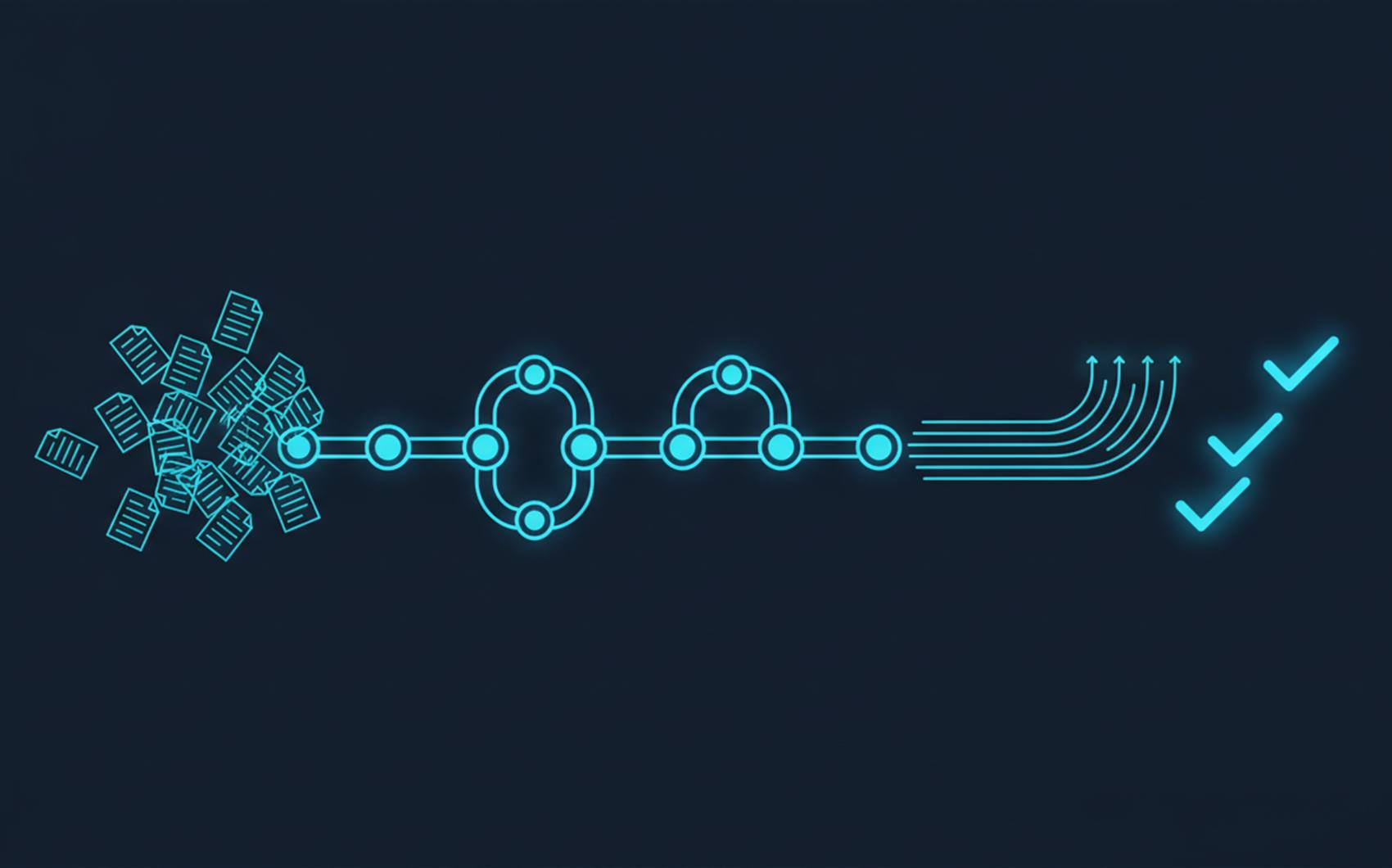
What automation really does: it turns scattered, manual work into one reliable flow.
Where NZ small businesses lose the most time
When I map how a small team actually spends its week, the same handful of jobs show up every time. None of them grow the business. All of them have to be done. A typical owner-operator or small office loses somewhere between eight and thirteen hours a week to this kind of work, roughly a full day and a half.
Where the admin hours go each week
Typical split for a small NZ trade or services team (hours per week)
The quiet killer is not the hours though. It is the leaks. A quote that takes three days instead of one loses you to the competitor who replied first. A lead that nobody chased is revenue that walked out the door. That is where automation pays for itself fastest, by plugging the gaps a busy human will always miss.
What to automate first
You do not automate everything at once. You start with the jobs that are repetitive, happen often, and hurt when they go wrong. Here is the shortlist I work through with almost every client, and what each one gives back.
| Process | The manual pain | What automation does | Time back |
|---|---|---|---|
| Lead response | Enquiries sit for hours; some never get a reply | Instant acknowledgement, logged, assigned, and a reminder if no one follows up | High |
| Quoting | Quotes take days; details get missed | Pre-filled quotes from a template, sent same day with a follow-up built in | High |
| Invoicing & payments | Re-typing job details; chasing unpaid invoices | Invoice raised when a job closes, with automatic payment reminders | Medium |
| Reviews | You forget to ask, so you stay invisible on Google | A review request goes out automatically after every completed job | Medium |
| Job & status updates | Customers call to ask "where is it up to?" | Status changes trigger an automatic update to the customer | Medium |
| Data entry & reporting | The same numbers typed into several systems | Systems talk to each other; reports build themselves overnight | High |
If you only ever did the top two, lead response and quoting, you would win more work and claw back most of that day and a half. Everything else is a bonus. Review automation in particular feeds straight into your local search ranking, which is why I often pair it with the SEO work I do for the same clients.
A real New Zealand example
Numbers in a table are one thing. Here is what it looks like in practice. I work with a metal fabrication exporter whose admin was quietly strangling the team. Quotes took about three days to go out. Job tracking and follow-ups were manual, so the team burned ten to twelve hours a week updating spreadsheets and chasing details, and things still slipped.
I mapped how they actually worked day to day, then automated the bottlenecks: quotes now go out the same day, job status updates happen on their own, and follow-ups run without anyone having to remember. The result:
3 days → same day
Quote turnaround
10–12 → 1–2
Admin hours per week
~450 hrs
Reclaimed in a year
Weekly admin hours, before and after
Same team, same tools, fewer things done by hand

Time back is the headline. Faster quotes and reliable follow-up are what actually grow revenue.
It is not a one-off. For an electrical business I connected their job software through to Xero so stock reconciliation and reorder drafts happen before the laptop is even open. For a plumbing company I built automatic review requests and branded payment confirmations that went live on their own systems inside about a week. You can see more of these on the portfolio.
You do not need to replace your systems
This is the objection I hear most, and the answer is almost always no. Good automation is built on top of the tools you already run, your job management software, your accounting system, your CRM, your inbox. It connects them so information flows between them instead of being re-typed by a person.
Under the hood I mostly use n8n, a workflow tool that links your apps together, with a layer of AI only where a decision or language is involved. You do not need to learn any of it. You keep working the way you work, the admin just stops landing on your desk.
What it costs and the ROI
Honest answer: it depends on what you automate, and I will not pretend otherwise. What I can tell you is how the maths works, because that is what decides whether it is worth it.
Say automation gives your team back ten hours a week. Value that time conservatively at forty dollars an hour and you are looking at roughly four hundred dollars a week, or around twenty thousand dollars a year, currently spent on work that software can do. That is before you count the jobs you win by quoting same-day instead of three days late.
The cost of doing it by hand
10 hours a week of admin, valued at $40/hour
Most small automations are scoped so they pay for themselves within weeks by capturing missed leads and cutting admin hours. I would rather build you one thing that clearly earns its keep than a big system you never use.
How to start
You do not need a strategy document. You need to find the one job that wastes the most time or loses the most money, and fix that first. Here is the order I work in:
- Find the bottleneck. Which task do you dread, or which leak costs you work? Start there, not with the shiniest tool.
- Map how it really happens, every step, including the messy bits people do in their head.
- Automate the one thing. Build on your existing tools, keep it simple, get it live.
- Measure it. Hours saved, quotes out faster, leads not missed. If it is not moving a number, change it.
- Then do the next one. Momentum beats a master plan every time.
That is exactly what a free audit with me covers: I find your bottleneck and show you the three highest-value things to automate first, with no jargon and no obligation.
Common questions
How much does business automation cost in NZ?
It depends on what you automate, but most small automations are scoped to pay for themselves within weeks through captured leads and saved hours. A free audit gives you a real number for your business before you commit to anything.
Do I have to replace my current software?
No. Automation is built on top of the tools you already use, like your job management system or Xero. Your team keeps working the same way.
What is the difference between regular automation and AI automation?
Rule-based automation follows fixed steps, like sending a confirmation when an invoice is paid. AI automation handles judgment, like answering a call, qualifying a lead, or deciding whether an enquiry is genuine.
How long does it take to set up?
Simple automations go live fast. A review and payment system I built for a plumbing company was running on their own infrastructure within about a week of go-ahead.
Is my business too small for this?
If you are losing hours to admin or missing leads, you are the right size. The smaller the team, the more a reclaimed day and a half a week is worth.
Find out what to automate first
Book a free audit and you will leave with three specific ways to save time or win more work, mapped to how your business actually runs.
Book your free audit